Vietnam Biodegradable Straws: Exporting Sustainability to the Global Market

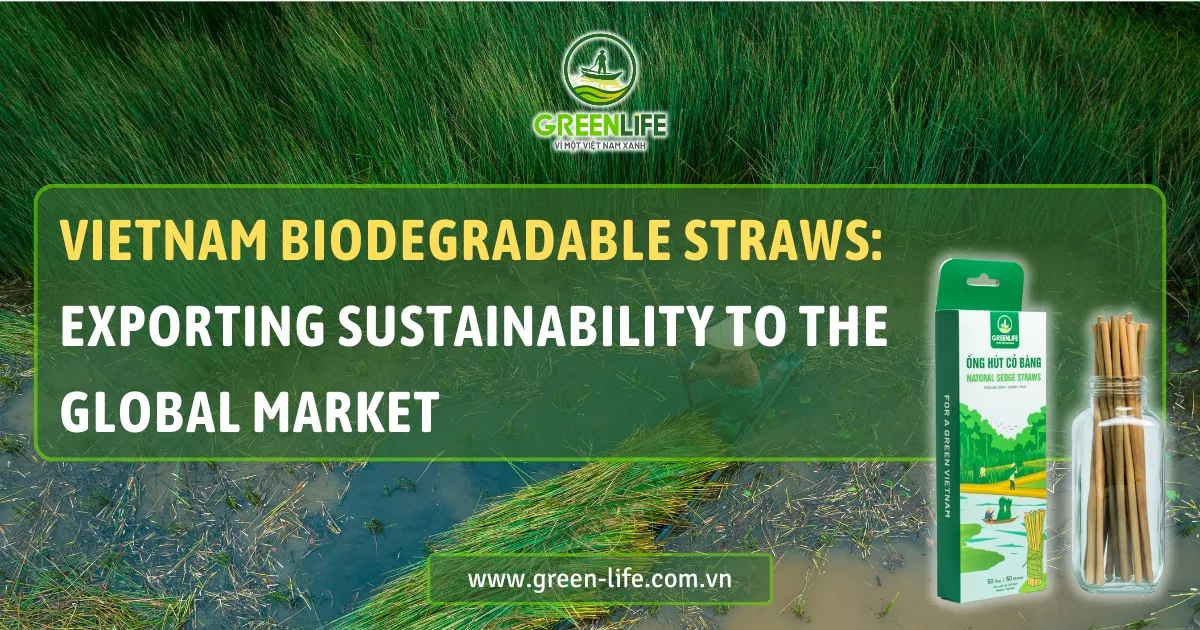
In response to environmental pressures and consumer preference shifts worldwide, biodegradable straws from Vietnam represent a sustainable alternative for global food service businesses. Crafted from renewable, plant-based materials like rice, bamboo, or Lepironia grass, these straws can elevate an establishment’s commitment to eco-friendly practices.
Beyond merely reducing plastic waste, they align with international environmental standards while promoting the use of innovative, locally sourced Vietnamese exports.
What are biodegradable straws and how are they made?
Biodegradable straws are a groundbreaking alternative to traditional plastic straws, designed with sustainability at their core. These eco-friendly options are made from natural, organic materials that break down rapidly in the environment, leaving no toxic residue.
Common materials include grass, sedge, rice, bamboo, wheat stems, and cassava,… each providing unique benefits while addressing the urgent need to mitigate plastic waste.

Sedge Straws
How Biodegradable Straws Are Made
1. Choosing the Material: The first step involves selecting a renewable resource. For instance, sedge, grass, rice and cassava are abundant in Vietnam, offering both environmental and economic advantages, while bamboo and wheat stems are ideal for durability and natural availability.

Sedge fields
2. Processing the Raw Material: Each material undergoes a different preparation process. For rice and cassava, the starch is extracted, mixed with natural binding agents, and formed into straw molds. Bamboo, sedges, grass requires cutting, drying, and polishing to achieve its final shape. Wheat straws, on the other hand, are simply harvested, cleaned, and trimmed.

Sedge Straws after cutting and clean
3. Sterilization: All materials are sterilized to ensure hygienic standards, making them safe for food-grade use. This step is particularly crucial for products entering global markets.
4. Final Touches: Biodegradable straws often undergo further testing for durability and usability. Rice-based options may be slightly thicker to handle liquids longer, while bamboo straws boast additional polishing to improve finish.
Why Choose Biodegradable Straws?
These straws decompose in natural environments within weeks to a few months, reducing the burden on landfills and oceans. Unlike plastic straws that persist for centuries, biodegradable ones ensure that consuming your favorite drink doesn’t come at the cost of harming marine life or contributing to climate change.
Vietnam’s dedication to exporting these sustainable products is reshaping global eco-consciousness. With initiatives highlighting innovations like grass straws from the Mekong Delta (read more at Dried Grass Straw), the country is not only addressing environmental concerns but also establishing itself as a leader in the green economy.

Dried Grass Straws in Vietnam
This simple yet high-impact switch to biodegradable straws represents a collective leap toward global sustainability, making every sip a conscious contribution to a better planet.
Environmental benefits for restaurants using biodegradable straws
Reducing environmental impact is a pressing priority for food businesses worldwide. By switching to Vietnamese biodegradable straws, restaurants can directly contribute to the fight against plastic pollution.
Such straws, made from natural and renewable materials like cỏ bàng (Lepironia grass), decompose within a short period, unlike traditional plastic straws which can linger in the environment for centuries.
Diminish Plastic Pollution
Single-use plastics account for a significant portion of marine and terrestrial pollution. By adopting eco-friendly straws, restaurants play a direct role in mitigating waste accumulation.
For example, a restaurant serving hundreds of drinks daily can prevent thousands of plastic straws from entering landfills each month. Customers are growing increasingly informed about the dangers of microplastics, and patrons appreciate dining establishments that actively care for the planet.
Align with Sustainability Goals
Governments and organizations are rolling out eco-regulations, pushing businesses toward greener operations. Biodegradable straws help establishments comply with global sustainability policies while setting a progressive example in the foodservice industry.
For environmentally conscious diners, opting for these straws reflects your restaurant’s commitment to responsible practices.

Lower Your Ecological Footprint
The production process of cỏ bàng straws is significantly less polluting than plastic manufacturing. It relies on minimal energy and primarily involves natural drying and treatment. Restaurants using these straws indirectly support local economies in Vietnam while lowering their carbon footprint. You can learn more about how cỏ bàng production supports green economies in this article about eco-friendly products.
Enhance Customer Trust
Today’s diners demand transparency. When a restaurant makes a tangible shift towards sustainability, such as using biodegradable alternatives, it helps foster customer loyalty. Many establishments even promote eco initiatives by highlighting biodegradable straw usage on their menus, turning this small switch into a key marketing advantage.
By adopting Vietnamese biodegradable straws, restaurants not only uplift their eco-credentials but also send a powerful message of responsibility and innovation to the global market. This is more than just a trend—it’s a sustainable transformation essential for the future of dining.

Meeting compliance and sustainability standards
To establish a robust presence in the global market, Vietnam’s biodegradable straws must adhere to stringent international compliance and sustainability benchmarks. These standards are not only essential for market entry but also for sustaining trust among eco-conscious consumers worldwide.
A key aspect involves meeting well-recognized environmental certifications such as the European Union’s EN 13432 or ASTM D6400 from the United States, which assess the biodegradability and compostability of products.

Vietnam’s grass straws, typically handcrafted and free from harmful chemicals, align closely with these expectations. Their degradation process sees them breaking down within months in natural environments, meeting and often exceeding eco-labeling criteria.
Furthermore, other frameworks like ISO 14001 (environmental management systems) highlight how manufacturers integrate sustainability through their operations.

By ensuring no synthetic coatings or chemical residues during production, biodegradable straw producers from Vietnam can achieve these qualifications, demonstrating not just product compliance but also environmentally friendly manufacturing processes.
In addition to certifications, understanding the local legislative context of target markets is essential. For instance, the EU’s single-use plastics directive and California’s statewide ban on non-compostable straws require products to meet specific standards tailored to reducing plastic waste. Vietnamese producers are increasingly adapting their production and packaging processes to align with these global shifts.
Such adherence to certifications and regulations reflects Vietnam’s commitment to producing not only eco-friendly dining solutions but also globally compliant products. Ultimately, every certified Vietnamese straw contributes to a larger mission—setting new benchmarks in global sustainability.
Boosting brand image with sustainable practices
Incorporating biodegradable straws into your restaurant’s operations is more than adopting a product—it’s a statement of values. As more consumers grow conscious of their environmental impact, they often prioritize businesses that mirror their sustainability goals.
Offering eco-friendly solutions, such as Vietnam’s grass straws, signals your commitment to the planet while shaping your brand as a forward-thinking establishment.

Moreover, this shift positively affects your reputation beyond the dining space. Satisfied consumers often take to social media to share these eco-conscious experiences, amplifying your brand’s reach organically. Whether it’s a photo of their drink or a review praising your commitment to green practices, this free and genuine publicity can attract like-minded customers while reinforcing loyalty among existing patrons.
Supporting Vietnam’s eco-friendly export industry
Purchasing biodegradable straws from Vietnam goes beyond promoting sustainable dining habits—it also strengthens the country’s eco-friendly export industry. By introducing products like grass-based biodegradable straws to international markets, Vietnam is paving the way for a global shift toward environmentally responsible consumption.
To learn more about how these eco-conscious products are changing the face of exports, and to explore Vietnam’s environmental efforts further, visit this source on the dried grass straw production from Mekong Delta. Proven effective in reducing waste and promoting green trade, these straws are emblematic of Vietnam’s innovative spirit in tackling climate challenges while ensuring growth opportunities for local producers.

Final words
Adopting Vietnam’s biodegradable straws is more than a choice – it’s an investment in sustainability, your brand’s credibility, and compliance with global eco-friendly practices. These straws, with their natural durability and environmentally conscious design, cater to modern diners’ preferences while supporting Vietnam’s efforts in sustainability. Equip your restaurant for the future by integrating these biodegradable straws today.
Enhance your eco-friendly practices with biodegradable straws.